
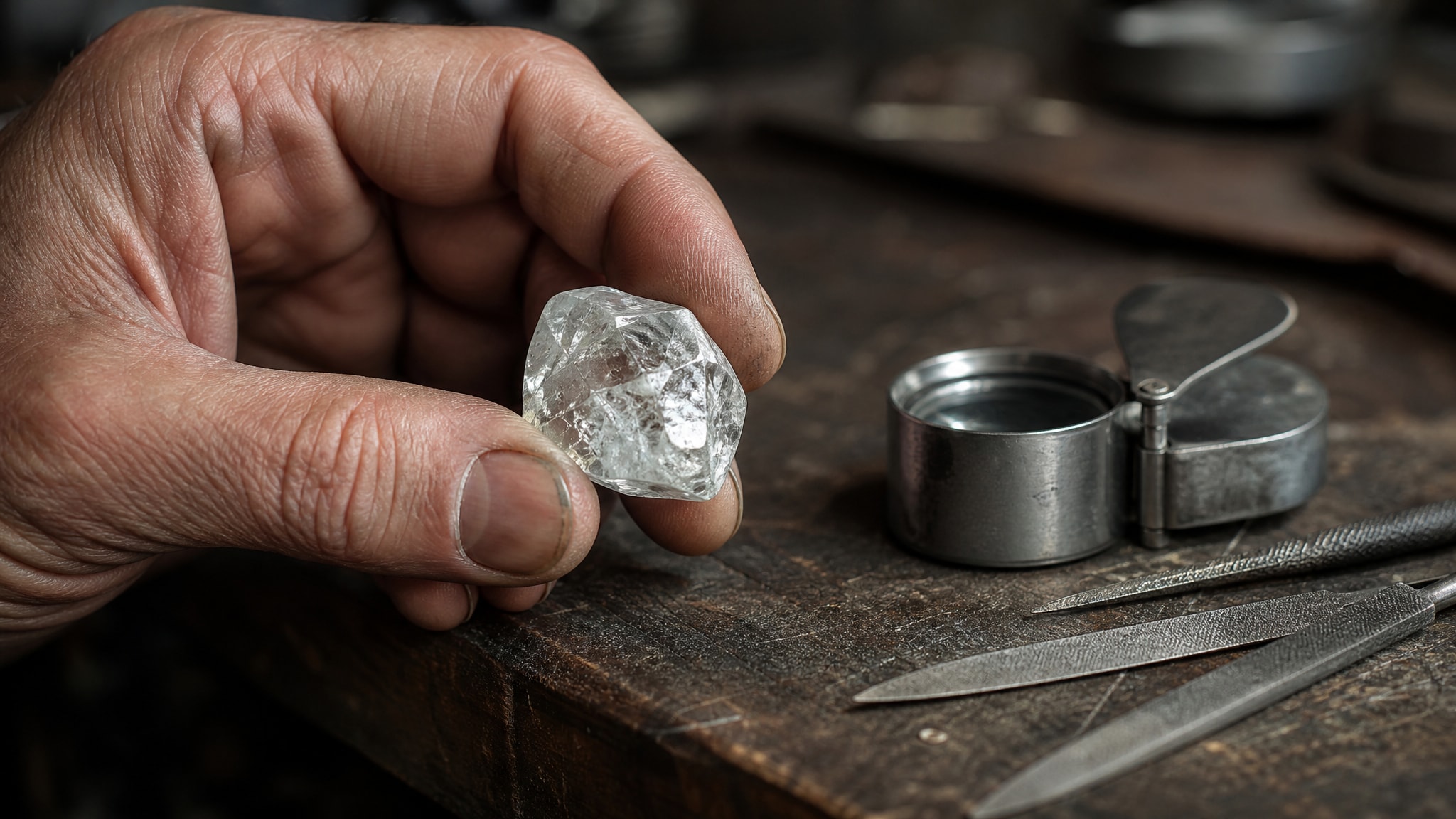
Choosing between a natural diamond and a lab grown diamond is one of the most significant decisions you will make when commissioning an engagement ring or bespoke piece. The conversation often focuses on immediate price differences or optical similarities, yet these factors only tell part of the story for someone seeking jewellery that endures. We have chosen to build our atelier around natural diamonds because their finite geological origin aligns with the permanence we seek in hand-finished jewellery. We believe this distinction matters deeply when you are marking a milestone meant to last generations.
This perspective comes from years of working at the bench and guiding clients through private consultations where honesty takes precedence over sales volume. Laboratory-grown stones have their place in the broader market, but they do not offer the same trajectory of rarity or historical resilience that defines fine jewellery heirlooms. Our role is to help you understand these nuances so your choice reflects both your values and your long-term intentions.
The Fundamental Difference in Origin and Rarity
The distinction between earth-mined and laboratory-created stones begins with genesis. No amount of technological refinement can replicate or erase that.
Geological Formation Versus Factory Production
Natural diamonds crystallized deep within the Earth's mantle over billions of years, under immense heat and pressure, before volcanic eruptions carried them to the surface. This geological violence created a crystal lattice entirely unique to its specific formation environment, carrying inclusions and growth patterns that work like a fingerprint of deep time. Lab-grown diamonds, by contrast, are produced in controlled industrial environments using Chemical Vapour Deposition or High Pressure High Temperature methods, over a period of weeks. The resulting carbon structure is chemically identical. But the stone lacks the chaotic, unrepeatable history of its natural counterpart.
You cannot manufacture the narrative of a billion-year-old gemstone on a production schedule.
Finite Supply in a Changing Market
Rarity is an intrinsic property of natural diamonds because the geological conditions required to form them ceased to exist eons ago. Every carat extracted represents a diminishing reserve that no human effort or capital investment can replenish. Laboratory production faces no such constraint. Output scales directly with reactor capacity and energy supply, so abundance is a feature of the manufacturing process, not a limitation. Natural stones stay finite. Lab-grown alternatives stay subject to industrial expansion curves.
Lab Grown vs Natural Diamond Value Over Time
Price is what you pay today, but value is what remains when market conditions shift and initial retail premiums evaporate.
Understanding Price Trajectories and Depreciation
Lab-grown diamond wholesale prices have declined significantly in recent years as manufacturing capacity expanded, and that decline illustrates the difference between technological abundance and geological scarcity. As production efficiency improves and more facilities come online, cost per carat keeps trending downward, in predictable alignment with other manufactured goods. Natural diamond values operate under different economic laws. They are tethered to extraction limits and decades of established market infrastructure that buffers against rapid depreciation. Buying a lab-grown stone at current pricing does not lock in future value. Natural stones have historically shown greater stability through various economic cycles.
Are Natural Diamonds Worth More Long-Term?
Whether natural diamonds are worth more depends entirely on your timeframe and your definition of worth. For immediate visual impact per rand spent, lab-grown stones currently offer larger carat weights at lower price points, which makes them attractive for fashion jewellery or budget-conscious purchases. Long-term value retention favours natural stones, though, because their scarcity cannot be engineered away, and secondary markets have centuries of precedent for pricing them on quality rather than production cost. We do not position natural diamonds as speculative financial instruments. But their resale floor is structurally higher than that of manufactured alternatives.
Why Choose Natural Diamonds for an Engagement Ring
An engagement ring carries emotional weight that goes beyond gemological specifications, and the stone at its centre should reflect that depth of meaning.
Emotional Resonance and Heirloom Potential
Clients who choose natural diamonds often speak about wanting a stone that mirrors the enduring nature of their commitment, formed by forces far older and more powerful than any human institution. No grading report can measure that. Yet it consistently emerges as the deciding factor when couples imagine passing a ring down to children or grandchildren. The knowledge that your diamond survived millennia underground before reaching your hand adds a layer of significance factory production simply cannot provide. Heirloom potential relies on this combination of physical durability and narrative weight, both inherent to natural origin.
The Role of GIA Certification in Trust
Emotional confidence needs objective verification behind it, which is why independent grading is the foundation of every natural diamond transaction. Every centre diamond we offer carries an independent GIA grading report, which provides objective verification of natural origin and quality characteristics, something no retailer's word can replace. The Gemological Institute of America maintains some of the most rigorous standards in the industry, and its reports distinguish between natural and lab-grown stones using spectroscopic analysis. For those wishing to explore this further, understanding GIA certification standards provides essential context for reading these documents with confidence during your selection process.
Certified Natural Diamonds and Our Sourcing Standards
We maintain an uncompromising policy regarding the stones we present to clients, because trust is built through consistent standards, not flexible inventory.
Every diamond in our atelier has been individually selected and verified as natural through GIA documentation before it ever reaches our viewing table. This curation means we sometimes turn away business when suitable stones are unavailable, but we accept that constraint as necessary to preserve the integrity of our recommendations. Our private consultations focus on helping clients understand the long-term implications of their diamond choice rather than closing a transaction, and that approach requires absolute certainty about what we are offering. When you work with us, you receive stones that meet documented quality thresholds, without exception.
Navigating Lab Grown Diamond South Africa Availability
The South African market now includes numerous retailers offering lab-grown diamonds across various price points and specifications. You will find these stones readily available in shopping centres and online platforms throughout Johannesburg and the surrounding areas, marketed heavily on size-per-rand value. De Melo Diamonds has deliberately chosen not to stock or source lab-grown stones despite this growing local availability. Our specialisation in bespoke natural diamond jewellery calls for undivided expertise and inventory focus.
This decision is not a judgment on those who prefer lab-grown options. It recognises that serving clients who want certified natural stones demands complete dedication to that specific category. If your preference lies with laboratory-created diamonds, we respectfully recommend consulting specialists who have built their practice around that product line.
Craftsmanship Deserves a Stone That Endures
Hand-finished jewellery represents hundreds of hours of skilled labour, and the materials set into those pieces should honour that investment of time and artistry.
Matching Hand-Finished Settings with Timeless Materials
Our bench jewellers shape precious metal with techniques that have remained essentially unchanged for centuries, creating settings designed to hold stones securely for lifetimes of daily wear. Placing a manufactured stone into such a setting creates a kind of dissonance, between the permanence of the craftsmanship and the replicability of the centre piece. We believe heirloom-quality metalwork deserves a centre stone of equivalent temporal significance, one whose rarity matches the irreplaceability of the artisan's labour. This alignment between material and method is central to our approach to bespoke fine jewellery, where every element of the finished piece speaks to longevity rather than temporary trends.
A Personal Perspective on Natural Diamond Resale Value
Discussions about resale value often become abstract, because they treat diamonds as commodities rather than components of personal legacy. In our experience, natural diamond resale value functions less like a stock ticker and more like a safety net within long-term client relationships. Clients who bought natural stones decades ago have found that their pieces retained enough value to fund upgrades, redesigns, or estate settlements when life circumstances changed. This resilience comes from the stable secondary market infrastructure that exists specifically for natural diamonds, a system that does not yet exist in comparable form for lab-grown stones.
We discuss these realities openly during consultations because informed clients make better decisions, even when those conversations mean acknowledging uncertainty. For those beginning this journey, selecting an engagement ring diamond means weighing several considerations beyond initial price, and we welcome the chance to guide you through that with transparency and care.
Your vision for a bespoke piece deserves conversation unhurried by retail pressure or inventory quotas. We invite you to book a private consultation experience, where we can examine certified natural diamonds together and discuss how their characteristics align with your personal aesthetic and long-term intentions.