Cut, colour, clarity and carat decide what you pay and what you see. Here's how to spend your budget where it actually shows.
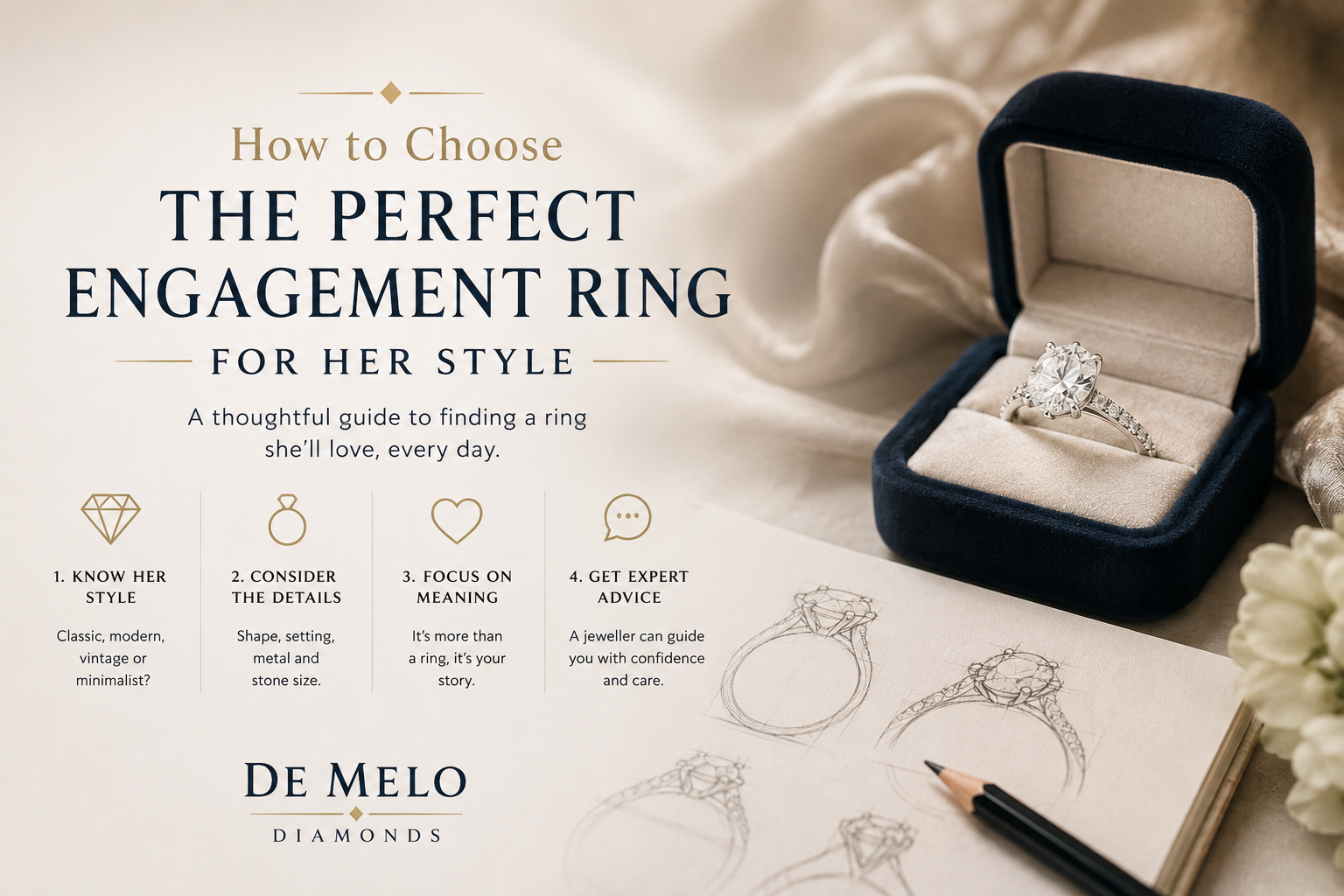
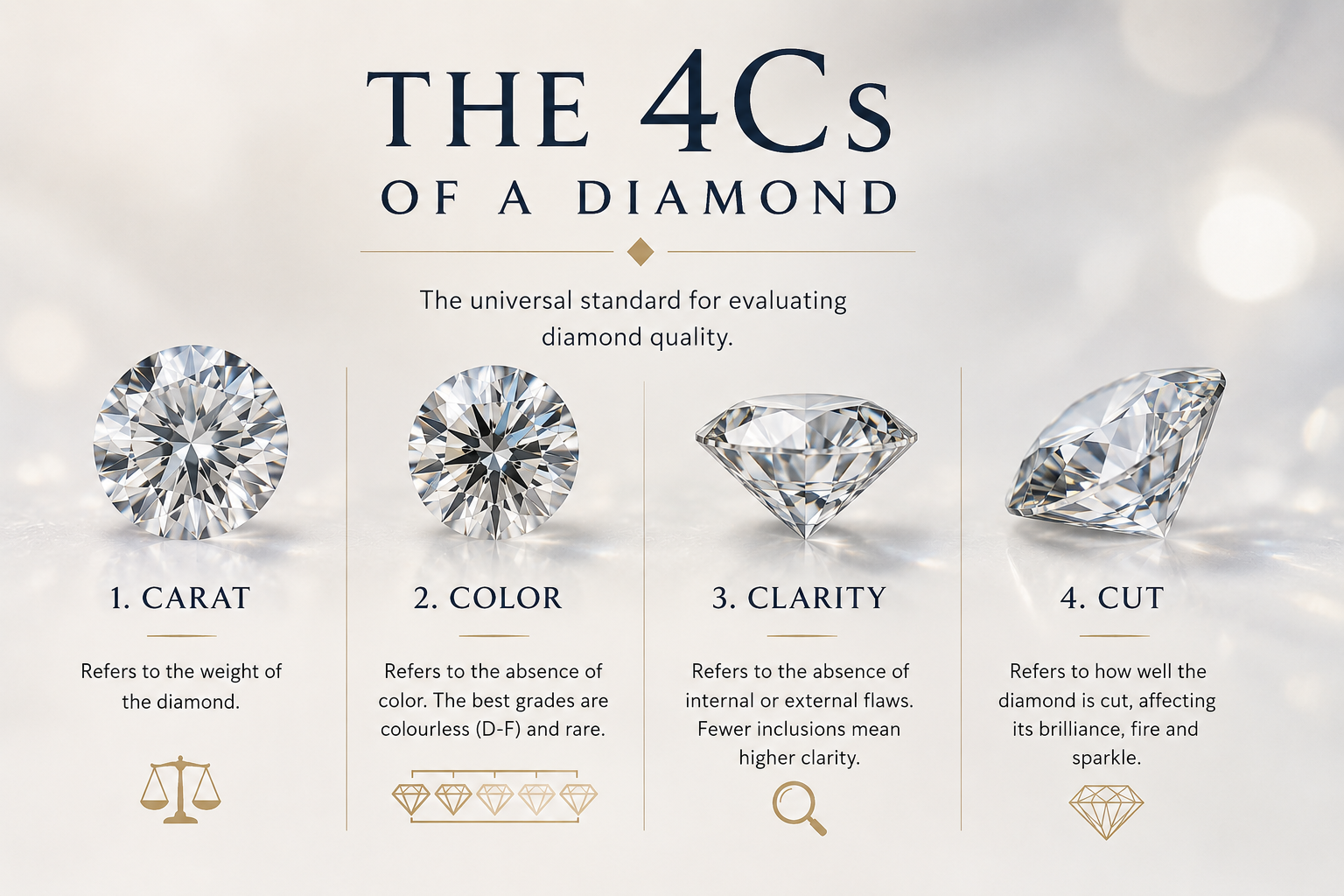
Almost every conversation about buying a diamond begins in the same place: a spreadsheet of numbers that mean very little until someone shows you what they look like in daylight. The 4Cs — cut, colour, clarity and carat — are simply the vocabulary the trade uses to describe a stone. Learning them is the difference between buying a certificate and buying a diamond.
Here is how we explain them to clients across a consultation table, and where we suggest you concentrate your budget.
Cut: where the beauty actually lives
Cut is not the shape of the stone — it is the quality of its proportions, symmetry and polish. It determines how much light enters the diamond and returns to your eye as brilliance and fire. Two stones of identical carat weight, colour and clarity can look worlds apart if one is cut well and the other is cut merely to preserve weight.
If you take one thing from this guide: never compromise on cut. An excellent-cut stone will look larger, brighter and livelier than a poorly cut stone of the same weight, and it will keep looking that way in restaurant light, office light and Johannesburg sunlight.
Colour: how far down the scale can you go?
Colour is graded from D (colourless) through to Z (noticeably tinted). The premium sits at the top of that scale, but the visible difference between neighbouring grades is subtle — especially once a stone is set.
In practice, G to H offers the best value in white metal: it faces up white to the naked eye without paying for laboratory-perfect colourlessness. If you are setting in yellow or rose gold, you can often go a grade or two further down without anyone noticing anything but warmth.
Clarity: eye-clean is the honest target
Clarity describes the tiny inclusions formed while the diamond grew. Grades run from Flawless down through VVS, VS, SI and I. The useful question is not 'what does the certificate say?' but 'can I see anything without magnification?'
A well-chosen VS2 or a favourably positioned SI1 is typically eye-clean and costs meaningfully less than a VVS stone that looks identical on your hand. This is where an experienced jeweller earns their keep: two SI1 stones can be very different diamonds depending on where the inclusions sit.
Carat: weight, not size
Carat measures weight, and prices step up sharply at the round numbers — 1.00ct, 1.50ct, 2.00ct. A 0.92ct stone can look almost indistinguishable from a 1.00ct stone on the finger while costing considerably less. Spread, which is how wide the stone appears from above, is often the more useful measure.
Balance matters more than any single number. A slightly smaller, beautifully cut, eye-clean diamond is a better purchase than a larger stone that looks dull.
Bringing it together
Our usual recommendation for a first diamond: prioritise cut, aim for eye-clean clarity, choose colour to suit the metal, and let carat weight take whatever is left. Then look at the stone in person — under a loupe and in ordinary light — before you decide.
We're happy to lay several certified options side by side so you can see the differences for yourself, with no obligation to buy on the day.
Next Step
Let's put this into practice
Browse the collections, or bring your questions to a complimentary private consultation in Johannesburg.